- About Us
- For Community Groups
- For AdvocatesFor Advocates
- News & EventsNews & Events
- Get InvolvedGet Involved
- Resources
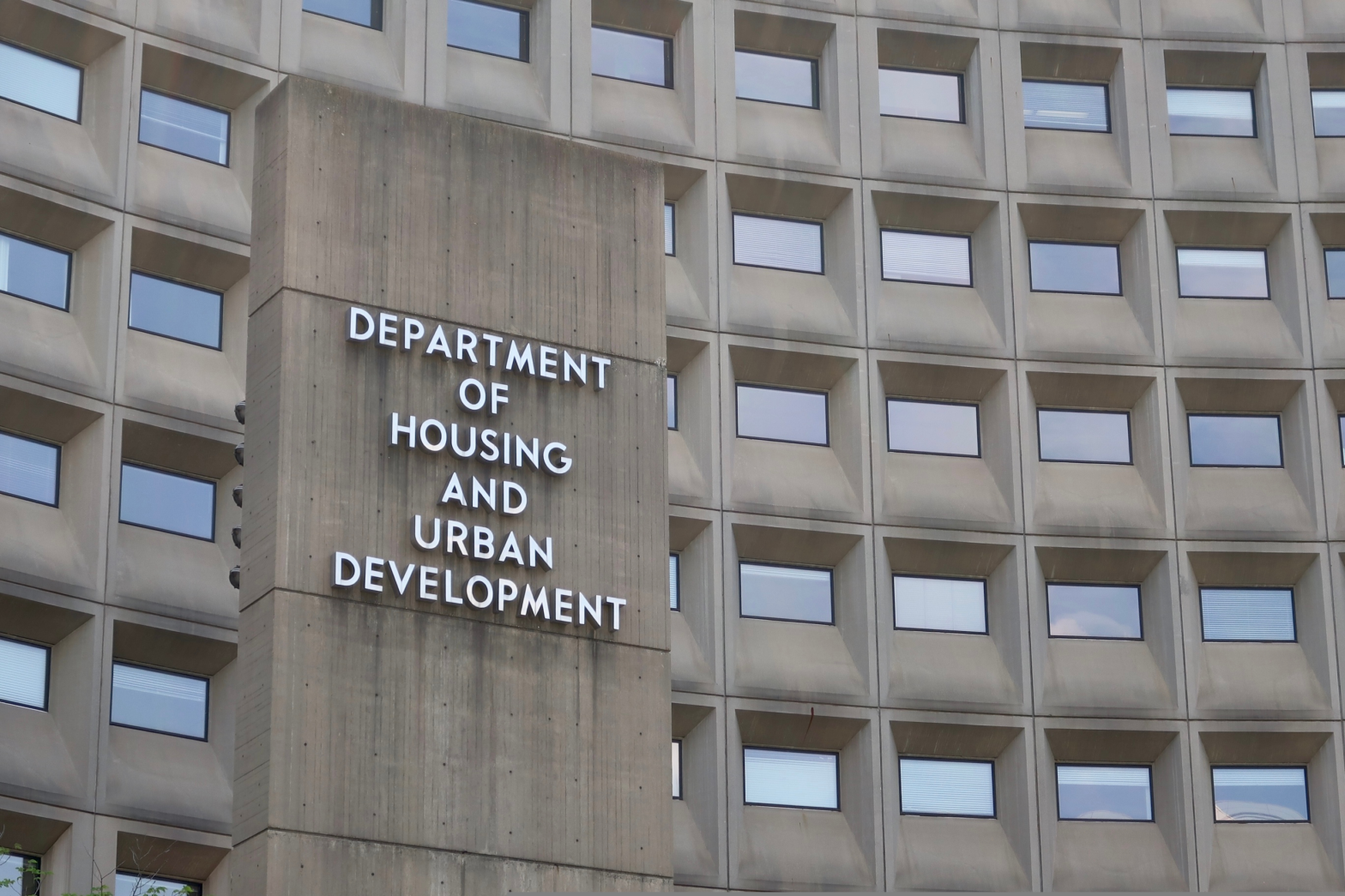
Regional Housing Legal Services (RHLS) submitted formal comments opposing the U.S. Department of Housing and Urban Development’s (HUD) proposed rule entitled Establishing Flexibility for Implementation of Work Requirements and Term Limits. The proposal would authorize Public Housing Agencies (PHAs) and certain other HUD-assisted housing providers to impose work requirements and strict time limits on families receiving housing assistance—and to terminate that assistance when families cannot comply.
RHLS strongly urges HUD to withdraw this rule in its entirety. The proposal exceeds HUD’s legal authority, contradicts decades of Congressional intent, and would cause widespread housing instability without improving economic outcomes. Most alarmingly, it would place millions of children at heightened risk of homelessness at a time when child and youth homelessness is already rising at unprecedented rates.
Independent analysis underscores the devastating scope of the harm this proposal would cause. The Center for Budget and Policy Priorities estimates that implementation of the proposed two-year time limit alone would result in 3.3 million people losing housing assistance nationwide. Nearly half of those affected—approximately 1.6 million—would be children, placing them at serious risk of homelessness.
The impact in Pennsylvania would be profound. More than 120,000 Pennsylvanians would lose housing assistance under the policy, including 61,700 children in communities across the Commonwealth. These are families who rely on housing assistance not as a temporary cushion, but as a stabilizing foundation that allows parents to work, children to attend school consistently, and households to weather economic volatility.
HUD’s proposal comes at a moment when child and youth homelessness is surging nationwide. According to the U.S. Department of Education, 1.3 million children experienced homelessness during the 2022–2023 school year. Even more troubling, homelessness among children increased 33 percent between 2023 and 2024. This is the highest annual increase of any age group.
Research consistently shows that even short periods of homelessness can have lasting consequences for children. Early and prolonged exposure to housing instability is associated with poorer physical and mental health outcomes, developmental delays, and chronic stress. Children and youth experiencing homelessness are also 87 percent more likely to drop out of school, undermining their long-term educational and economic prospects.
Against this backdrop, it is incomprehensible that HUD would propose a policy that explicitly authorizes housing providers to terminate assistance to millions of families.
At RHLS, we work closely with nonprofit housing developers and owners throughout Pennsylvania and have extensive experience supporting programs that help residents move toward greater economic stability. We know that successful self-sufficiency initiatives require sustained support: intensive case management, employment counseling, childcare access, transportation support, and strong local labor markets.
The proposed rule offers none of these. Instead, it relies on punitive measures like work requirements and rigid time limits, without providing funding for essential supportive services. Decades of research, including evaluations of welfare-to-work and housing demonstration programs, demonstrate that such requirements produce only modest, short-lived employment gains, if any at all, while substantially increasing the risk of housing loss.
Even among Moving to Work (MTW) agencies—which have far greater funding flexibility—many PHAs abandoned work requirements and time limits after finding them ineffective, administratively burdensome, and harmful to families. Several concluded that residents were more likely to achieve self-sufficiency when they were not subject to time limits.
Beyond the harm to families, HUD’s proposal would impose significant costs on state and local governments. Rising homelessness increases strain on emergency shelters, schools, child welfare systems, and healthcare providers. Local Continuums of Care would be forced to absorb new administrative, and service demands without additional resources. This is an especially serious concern given recent instability in federal homelessness funding processes.
For Pennsylvania communities already grappling with a severe shortage of affordable housing, this proposal would push more families into crisis while diverting limited public dollars toward costly emergency responses instead of long-term housing solutions.
Rather than advancing a rule that exceeds HUD’s authority and threatens to destabilize hundreds of thousands of families, RHLS urges HUD to focus on policies that promote economic opportunity and housing stability. That means investing in affordable housing, funding robust supportive services, and partnering with housing providers to address real barriers to employment—without putting children’s homes on the line.
Stable housing is not a reward for compliance. It is the foundation that makes work, education, and family stability possible.
If you would like to join RHLS in future advocacy efforts to protect housing stability for children and families in Pennsylvania, please contact Deanna Dyer, Director of Policy, at deanna.dyer@rhls.org.
